
No Cars, No Worries?
These press releases can be summarized into four mega-trends impacting Western Europe’s largest economies:
1. DIGITAL. Consumers continue to grow their use of rapid delivery aggregators, home delivery vans, and ‘pickup/Drive’ solutions to purchase everyday essentials
2. VALUE. Consumers are attempting to economize when using these ‘digital shopping’ solutions by trialing ‘premium private label’ solutions amongst the items added to their baskets
3. ULTRAFRESH. Mainstream supermarkets are shrinking their stores, putting categories that do not trade well in the digital environment in core floor positions after shrinking stores—such as ultra-fresh and ready-to-eat solutions
4. ON-THE-GO Mainstream supermarkets are also growing their convenience proposition – neighborhood express supermarkets – at an astonishing pace.
Here are just a few examples of these mega-trends:
· Coopérative U, France’s number four, said sales via ‘Drive’ climbed to EUR1.5bn, rising 11.3% while the rest of the market grew 5.5%, leaving E. Leclerc to only deliver EUR6.23bn on 4.5% growth
· Morrisons, the UK’s number four, said online sales for the year grew in “Double Digits”
· Sainsbury’s the UK market’s number two, said they achieved a “record-breaking” result from their convenience business
· Jumbo, the Dutch market’s number two, indicated that online shopping was up nearly 10% and that revenues from Retail Media were up by 30%
· Coop Swiss, one-half of Switzerland’s big two, announced online growth of 10% and convenience growth at double the rate of full-sized supermarkets
The question now becomes about 2026. Will see these trends remain as intense as they are now, accelerate, or decelerate?
The consensus view seems to be that they will ‘decelerate’, ie that as more and more consumers switch, there will be less growth from switching.
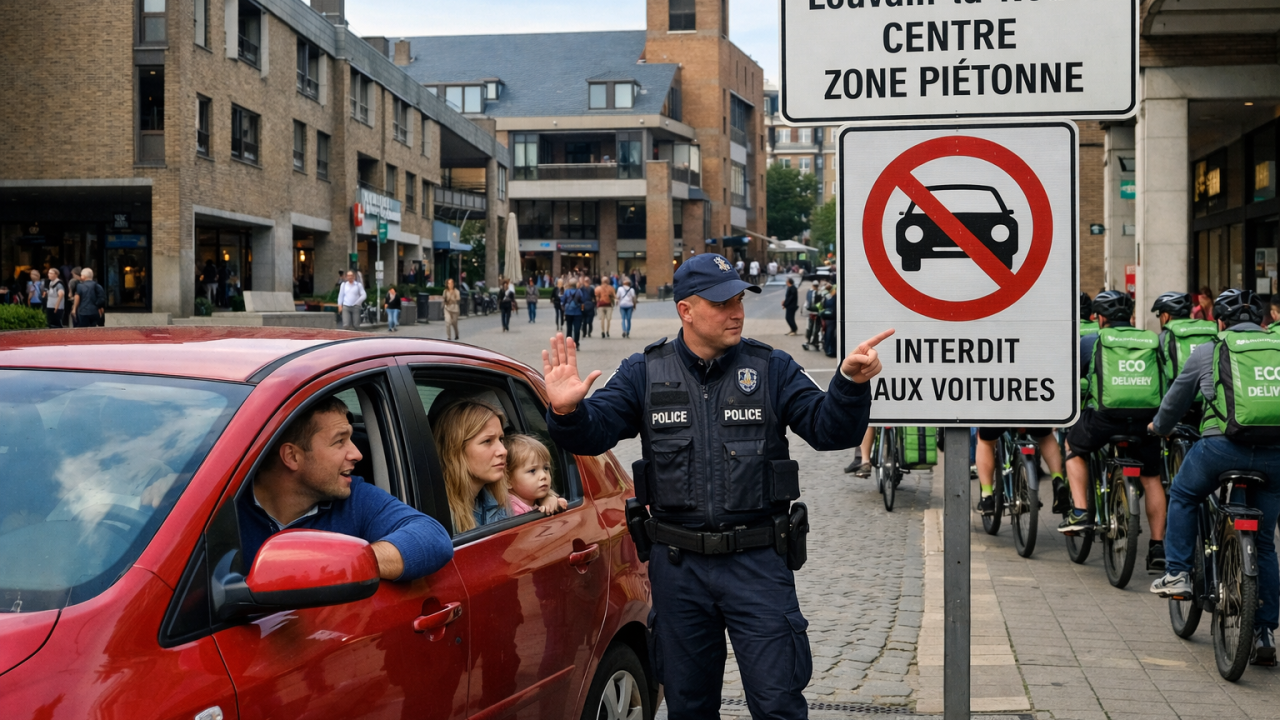
This view is flawed for one reason: “Pedestrian Cities.”
You see, the European Union has a new initiative underway, where the objective is to make city centers accessible to pedestrians only.
Currently there are about 11 cities participating in the scheme but expectations are that as many as 100 zones could be declared as pedestrian only just looking at 2026. Good examples are Louvain-le-Neuve in Belgium and Rovinj in Croatia where pedestrian only rules are already enforced. However, if you consult the EU’s Urban Mobility database, you’ll find that a whopping 400+ more city programs are about to come into effect. Nowhere is this more intense than the Netherlands where dozens of cities will soon make the switch.
What have we learned from the pedestrian only tests we have seen in places like Cambridge and Greenwich England, part of France, Germany such as Cologne, and the 11 pedestrian only cities?
Three things:
a) Consumers living-in and visiting Europe’s pedestrian-only centers don’t want a one-size fits all shopping destination. They like a café, then a bakery, then a convenience supermarket, and so on.
b) Consumers that live outside the pedestrian zone flood these places on weekends and do a huge amount of shopping while visiting – using things like order & pickup digital solutions to get what they want back home
c) Digital grocery shopping isn’t just a percentage of physical shopping for consumers in these zones (like 5, 10, 15, 20%) – it’s the majority of all grocery shopping
In summary, we have learned a lot from the grocery results being shared by private and public European grocers over the past few weeks. We have learned that consumers are using digital solutions more often, when they do so they’re expecting value, they don’t want to use digital services for ultrafresh nor on-the-go. What we have not learned is whether these trends will stay the same, accelerate, or decelerate in 2026.
I think the soon-to-be pedestrianization of another 400+ city centers in Europe would lead to the conclusion that the trends will not decelerate anytime soon.

As you look at 2025, ask yourself, how will 2026 be different?
One thing is certain for 2026: More consumers will live-in or visit pedestrian-only city centers across a wide swath of Europe.
If you want to understand how consumers in pedestrian-only living spaces behave differently from other consumers, I would say start by looking at the Netherlands as a step one building block.
Good luck in the week ahead.
